Newsletter: Community Projects Have Never Been More Affordable

Michigan communities aren’t waiting to find financing for future projects, even with the national and state economies on hold due to the COVID-19 pandemic.
The Village of Roscommon recently secured financing through the United States Department of Agriculture Rural Development (USDA-RD) program. It received $11 million in grants and low-interest loans to improve their water and sewer systems.
“Getting a grant for an $11 million infrastructure improvement project is almost unprecedented and it’s huge for a small village like us,” said Lance Cherven, director of the Village’s Department of Public Works. “It allows us to do a lot of updates on the water system and a bunch of sewer lining and repairs.
These things were in our capital improvement plans, but they were just a dream a couple of years ago.”
USDA-RD funds will help Roscommon replace or repair 2.3 miles of sanitary sewer, several manholes and service connections, televise the collection system, upgrade and repair lift stations and install a SCADA system. It will also give the village a new aeration system and screening at the wastewater treatment facility.
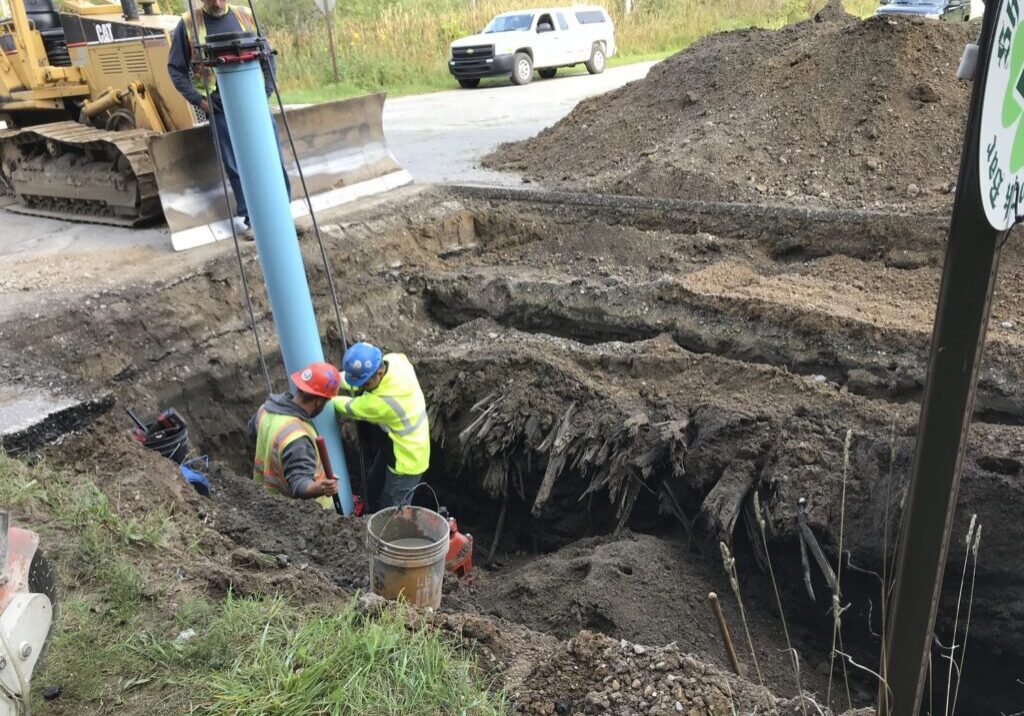
More than a mile of aging undersized watermain will also be replaced in the water project along with motor and pump replacements at two wells, replacement of a third well, and installation of new telemetry, and remote read water meters.
“Our engineering firm (F&V) was proactive in reaching out to the USDA and finding out what needed to be done to meet the grant criteria and that was really helpful,” said Cherven, after the village’s first application to USDA-RD was a successful one.
Design engineering and budgeting is under way with bids expected to go out this fall. Construction is planned for the spring of 2021.
APPLY NOW TO CAPITALIZE ON LOW INTEREST RATES
Historic interest rates, with extended repayment terms available, are likely to cause an uptick in state and federal grant and loan program applications.
Now is the time to start your future projects, especially with construction costs going up every year. It is important to plan ahead as some funding programs have application deadlines.
State and federal programs recently announced low interest rates that work in your favor with new rates as low as 1.375% and municipal bonds near 2% or lower.
For example, the USDA’s new interest rates for water and wastewater projects funded this quarter are:
Poverty level: 1.375%
Intermediate level: 1.875%
Market level: 2.375%
USDA-RD’s program supports communities with a population below 10,000 and interest rates are based on the median household income (MHI) within that community.
The Michigan Revolving Fund programs – Clean Water State Revolving Fund (CWSRF) and Drinking Water State Revolving Fund (DWSRF) – also have plenty of money available for your projects and the Michigan Department of Environment & Great Lakes Energy (EGLE) is planning to unveil new programs that will also offer unique funding opportunities.
Grant/loan forgiveness/incentives are available through various funding programs for qualifying projects. New funding stimulus programs have also historically rewarded “shovel-ready” projects that have preliminary engineering studies completed outlining the scope and cost of the proposed project.
It can take time to prepare an application. Communities are encouraged to start early in the process and work with an engineer to develop the project scope, prepare engineering studies, and work with a municipal financial advisor to evaluate revenue, budgets, and funding strategies.
Now is a great time to take care of your water and wastewater needs. If you would like to discuss the low-cost funding options available for your projects, please contact F&V’s Don DeVries at ddevries@fveng.com or at 800.494.5202.
You can reach us today at any one of our 11 locations.
Related Posts