Newsletter: Get in Line! First Call for OCRA Projects.

The Town of Windfall’s aging wastewater treatment plant has new life thanks to a Community Development Block Grant (CDBG) administered by the Indiana Office of Community and Rural Affairs (OCRA).
The $2.1 million improvement project is expected to be completed this spring.
“The lift stations are working much better and I don’t have to run down there every time it rains, which is wonderful,” said Denise Ryan, a member of the Town of Windfall Council. “It’s a dream coming true for our small town.”
Small Indiana towns and cities will get a chance to apply for the first round of CDBG funding on March 29 as OCRA makes its first Call for Projects in 2021. Proposals are due by April 29 and awards are expected to be announced in mid-August. A second round of funding will be announced later this year.
OCRA’s Wastewater and Drinking Water Program is aimed at protecting the community’s health and environment, reducing utility rates for low-to-moderate income communities and improving rural infrastructure to support long term growth.
The first time around proved to be a charm for the Town of Windfall, which was awarded $700,000 from the CDBG program in 2019 for wastewater improvements. In addition to the OCRA funding, the Town also received a $750,000 grant and a $720,000 loan commitment from the Indiana State Revolving Fund (ISRF) program for the upgrades.
Windfall has had deficiencies at its wastewater treatment for years. The repairs are part of an Agreed Order by Indiana Department of Environmental Management (IDEM) and are expected to improve operational efficiencies at the plant and reduce infiltration in the collection system.
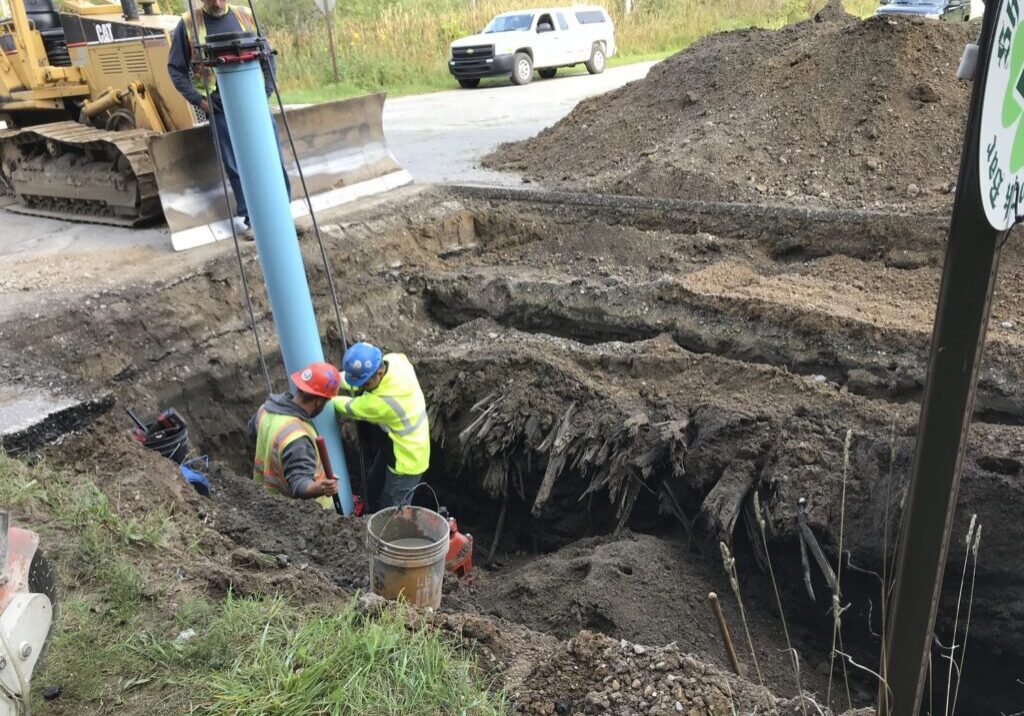
The overall project included lift station improvements, laboratory equipment and rehabilitation/lining nearly 80 percent of the sewer collection lines to reduce infiltration.
“The system is working so much better,” said Ryan, who has volunteered hundreds of hours to help in the day-to-day WWTP operations, including turning on blowers, painting and cleaning filters. “The lining is done and that should help with any kind of back-up or flow that is not working correctly. We’re looking pretty good for the next 20 years.”
GRANTS UP TO $700,000 AVAILABLE
Funding for the CDBG programs come from the U.S. Department of Housing and Urban Development and is administered by OCRA. The state of Indiana distributes these CDBG funds to rural communities to assist units of local government with various community projects like improving infrastructure, downtown revitalization, public facilities improvements and economic development.
Communities are eligible for improvement grants up to $700,000 for wastewater plants, wastewater collection systems and drinking water plants, towers, and distribution systems.
A dozen Hoosier communities were awarded more than $8 million in the second round of 2020 OCRA grants. More than $15 million was awarded to 24 communities in the first round.
There are many guidelines to follow in applying for OCRA funds. Two public hearings must be held at different stages of a proposed project development. One public hearing must be held prior to submission of the proposal, and the second hearing must be held after submission of the proposal but prior to the submission of the full application.
OCRA receives more applications in each grant cycle than can be funded. Applicants should be aware that preparation of a full application is complex and requires a lot of technical input and investment of time.
“Before I took office, I didn’t realize all the things needed to get a grant or loan,” Ryan added. “You need an engineering consultant to help you understand what the process is and how it works. If it wasn’t for F&V, we couldn’t do a lot of the things that we have done. When we had questions, they had answers.”
If you need help in exploring funding options, brainstorming water or wastewater improvements, or assistance on the preparation of an application for your community, contact Troy Stahl at
tstahl@fveng.com or at 317.843.0022.
You can reach us today at any one of our 11 locations.
Related Posts