Newsletter: It’s Not too Late for Infrastructure Funding

Michigan communities still have time to tap into “once-in-a-generation” and other kinds of federal infrastructure funding administered by the state.
The Infrastructure Investment and Jobs Act (IIJA) – also known as the Bipartisan Infrastructure Bill – is providing funding for all types of infrastructure projects, including transportation, water, wastewater, energy, and environmental remediation. The bill, signed into law Nov. 15, 2021, includes $973 billion over five years (fiscal years 2022-2026).
In Michigan, the IIJA monies are being funneled through the Michigan Department of Transportation (MDOT), Environment, Great Lakes, and Energy (EGLE), Department of Natural Resources (DNR), and other state agencies to fund existing programs and initiate some new ones. Agencies and funding available include:
MDOT – $7.9 billion for highways and bridges, $54 million for highway safety projects, $1 billion over 5 years to improve public transportation options, $363 million for airport infrastructure, plus monies for railroad infrastructure improvements.
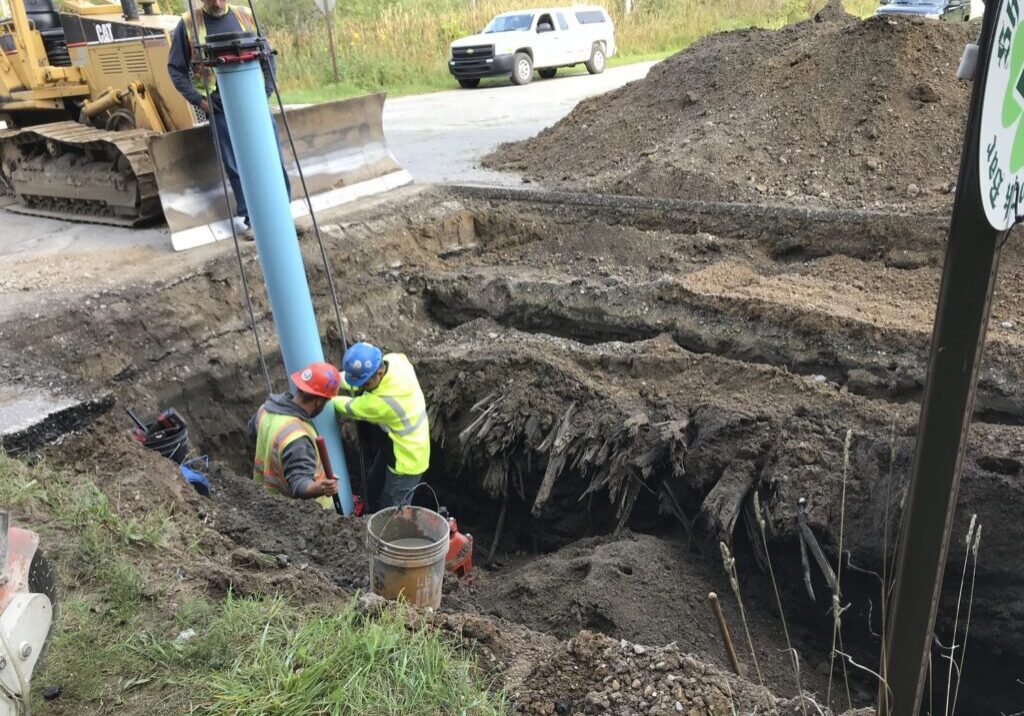
EGLE Drinking Water State Revolving Fund (DWSRF) Program – $44.16 million for DWSRF, $69.6 million for DWSRF Lead Service Line Replacement, and $18.55 million in DWSRF funding to address emerging contaminants.
EGLE Clean Water State Revolving Fund (CWSRF) Program – $76.5 million to CWSRF and $4.02 million to CWSRF to address emerging contaminants.
The “once-in-a-generation” investment in infrastructure is a historic opportunity to: rebuild Michigan’s roads, bridges and rails; expand access to clean drinking water; tackle the climate crisis and advance environmental justice, while investing in communities – both urban and rural – that have too often been left behind.
Michigan also passed a Water Supplemental Bill (SB 565, as passed by the House) which allocated the first year of IIJA funding to the EGLE SRF program and also allocated $2 billion of Michigan’s Coronavirus State Fiscal Recovery Funds from the American Rescue Plan Act (ARPA) to DNR, EGLE, and other State agencies.
Discussions with EGLE SRF staff indicate that the additional funding from the Michigan ARPA monies, included in Public Act 53 of 2022 (SB 565), will be available for FY2024 and FY2025 and will be added with the allocations from IIJA for those fiscal years to give the SRF program larger than normal funds for the next four years.
TAKE ADVANTAGE OF EXTRA MONIES
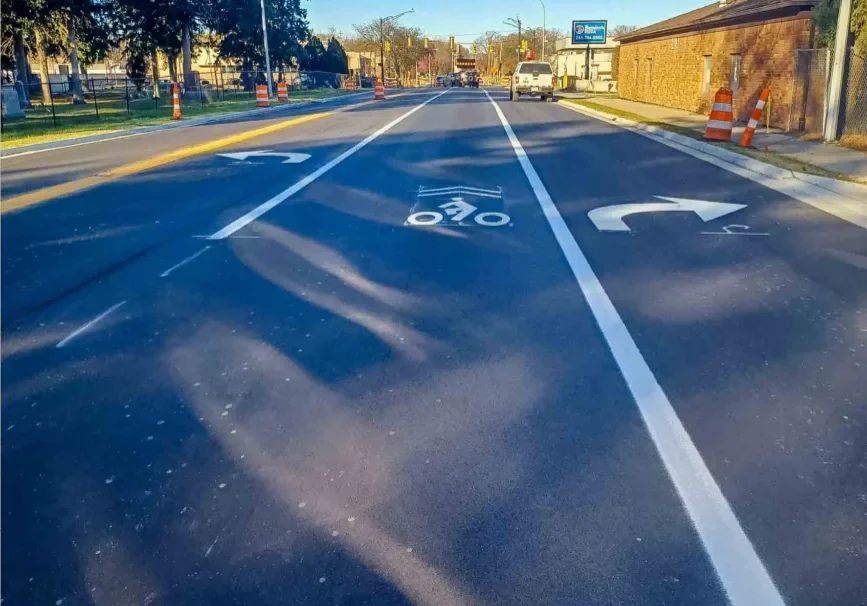
The City of Belding is one of the Michigan communities taking advantage of both MDOT, CWSRF and City ARPA funding. They are reconstructing Ellis Street with MDOT funding, planning wastewater system improvements with CWSRF monies (with potential for principal forgiveness and PFAS grants), and cleaning out a lagoon with ARPA funding.
“We are very thankful for all the funding assistance,” said Jon Stoppels, Belding’s city manager. “Belding is a small town with limited tax and utility revenues to undertake projects of this magnitude on our own.”
Belding hired Fleis & VandenBrink (F&V) to help it with the funding processes and applications.
“Our consultant has proven to be invaluable,” Stoppels said. “Their professionalism has been amazing when it comes to keeping us up to date on the latest funding opportunities and requirements.”
While the time has passed for Michigan communities to meet fiscal year 2023 application deadlines for certain funding programs like MDOT and SRF, many state funding programs will have additional monies for the upcoming fiscal year. Now is the time to begin the process of applying for next year’s applications. Some programs include upcoming deadlines that can’t be missed, like the Intent to Apply form for SRF funding for wastewater, stormwater, and drinking water projects, which is due Nov. 1, 2022, for FY2024 funding.
Applying for the money often requires detailed technical reports, a plan for how the funds will be used, and an engineering report on how the infrastructure upgrade will solve an issue.
F&V staff have experience in combining various funding programs and designing shovel-ready projects. We are ready to assist you in identifying the best option to fund your project. Call us today and let F&V experts assist you in applying for best fit funding programs and get you a slice of the “once-in-a-generation” infrastructure funding. Contact F&V’s Elaine Venema at 800.494.5202 or email at
evenema@fveng.com.
You can reach us today at any one of our 11 locations.
Related Posts