Newsletter: Update your GIS for Best Decision Making
for web

Community leaders in Michigan who have invested in a Geographical Information System (GIS) are now faced with the challenge of keeping them up to date or watching them become obsolete.

GIS, one of the best tools for community leaders for today’s challenges, is a technological system that leverages locational and tabular data, computer hardware, and software to gather, map, and analyze geographically referenced data. GIS allows users to organize, visualize, and analyze vast amounts of data together by creating maps and charts.

Community leaders are still learning the important role this technology plays in integrating different kinds of information. However, without proper maintenance, the information in the GIS will slowly become outdated and may lead to making incorrect conclusions.

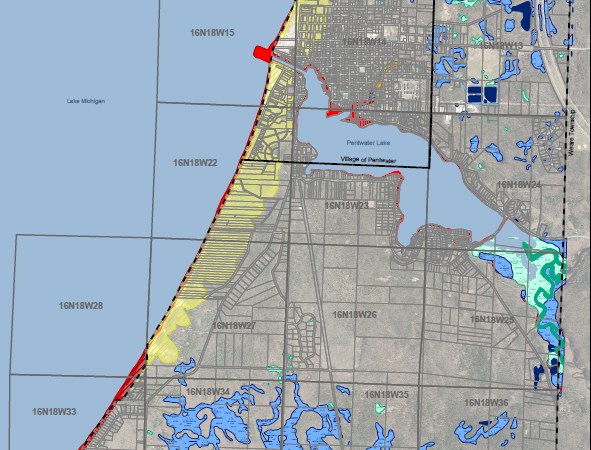
Fleis & VandenBrink (F&V) assisted both Pentwater Township and the Village of Pentwater in updating its land use Master Plan. Each community had an ArcGIS Online account, which F&V maintains, so community leaders can view and interact with web maps.

Read the full newsletter.

You can reach us today at any one of our 11 locations.

Contact Us

Contact Us

Contact us.

Captcha

Related Posts

How Road Commissions Decide Which Roads Get Fixed

August 19, 2026

PASER ratings, Act 51 funding rules, and asset management plans decide which Michigan roads get repaired. Here’s how road agencies set priorities.

Lowest Bid, Highest Cost: Why Communities Should Look at Qualifications-Based Selection

August 5, 2026

When the lowest engineering bid backfires, communities pay through change orders and rework. Here’s how Qualifications-Based Selection (QBS) works instead.

What Structural Engineering Looks Like on a Municipal Project

July 27, 2026

Structural engineering plays a critical role in municipal projects by supporting the safety, durability, and long-term performance of essential community infrastructure. While many people associate structural engineering primarily with buildings,…

What to Know About Streetscapes

July 10, 2026

Great streets are about more than pavement; they’re about creating safe, welcoming spaces for everyone. Streetscapes include carefully designed elements that shape our public streets. Elements include sidewalks, bike lanes,…

What Happens to Your Watermain After Construction Is Done: Post-Construction GIS Explained

April 28, 2026

Bottom line: A watermain job is not fully closed until the installed pipe, valves, hydrants, fittings, taps, and depths are captured after construction and loaded into the municipal GIS. For…

Why Valve Turning and Hydrant Flushing Pay Off Over Time

March 23, 2026

Bottom line: Valve turning and hydrant flushing keep water system assets usable before a break, fire event, or water quality issue puts the system under pressure. For public works teams:…

Michigan Revamps Leaking Underground Storage Tank Site Closure – What It Means for You

March 4, 2026

Bottom line: Michigan’s updated Part 213 LUST closure process gives owners a new risk-based path through MIRBCA guidance and RIDE electronic reporting. For environmental teams: Closure work now depends on…

A Complete Guide to Indiana Wellhead Protection Programs

February 4, 2026

Bottom line: Indiana Wellhead Protection Programs protect public groundwater wells by mapping the recharge area, identifying contamination sources, and setting a local management plan. For utility teams: A strong WHPP…

A Complete Guide to Michigan Wellhead Protection Programs

January 28, 2026

Bottom line: Michigan’s voluntary WHPP gives groundwater communities a structured way to protect public wells before contamination reaches the water supply. For utility teams: The plan ties WHPA delineation, source…

EPA Stormwater Pollution Prevention Plans (SWPPP)

December 1, 2025

Bottom line: A Stormwater Pollution Prevention Plan is the operating document that connects NPDES permit coverage to stormwater controls, inspections, monitoring, and reporting. For public works teams: The SWPPP should…