Press Release: Au Sable Township gets $1.4 million for watermain extension

Au Sable Charter Township received a $1.4 million state grant earlier this month to extend its water distribution system to 25 homes with wells affected by per- and polyfluoroalkyl substances (PFAS) contamination.
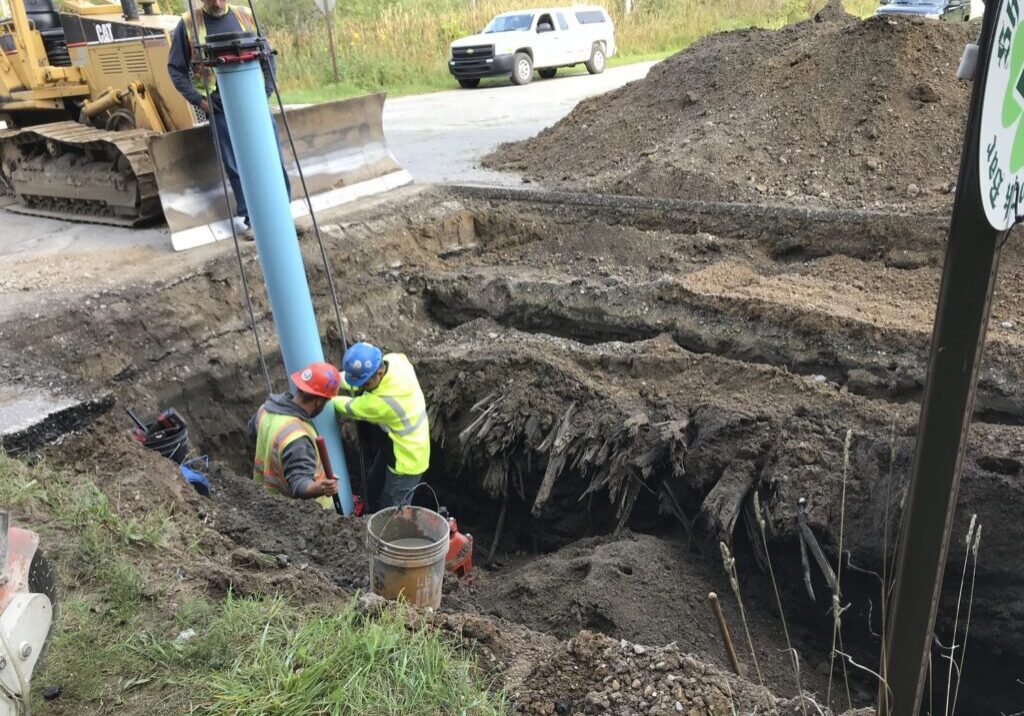
The Township was awarded the drinking water system grant through the Consolidation and Contamination Risk Reduction (C2R2) grant. The grant, appropriated in part 1 for PFAS and emerging contaminants, will pay 100 percent of the costs associated with installation of approximately 4,400 linear feet of new watermain, new hookups and abandonment of private wells along Pine Street, Chester Road, O’Toole Street, Fourth, Fifth Streets, Mayberry and Farnsworth Streets.
Private wells along those streets had reported PFAS levels greater than one or more of the PFAS maximum contaminant levels (MCLs), township officials said.
“I think this grant is wonderful and it’s a huge deal,” said Eric Strayer, Au Sable’s superintendent/zoning administrator. “It really helps a community our size with infrastructure improvements that we would not otherwise be able to do.”
Consultant Fleis & VandenBrink (F&V) assisted the Township with the Michigan Department of Environment, Great Lakes, and Energy (EGLE) grant application and is currently working on project designs. Bidding is expected by year’s end and construction will start in the spring of 2024.
“When we put in the application in 2020, it was a very competitive grant program and only about a half dozen projects received funding,” Bartow said. “We thought we had a good application, but our project didn’t score high enough.
“So, we were pretty excited to learn last fall that EGLE received additional funding and we got selected.”
The C2R2 grant, which pays for contamination remediation efforts or connection to an alternate system, includes construction costs and engineering fees. The grant was about $400,000 more than what the Township asked for in 2020 due to the rising construction costs.
More than 50 percent of the 25 homeowners in the area have agreed to hook up to the municipal water system to date. The township’s community water supplier is the Huron Shores Regional Utility Authority.
“It’s a once-in-a-lifetime opportunity to hook up to a water supply with a grant that covers it,” Strayer said. “It’s a free deal and win-win for residents that won’t come around again.”
Residents with wells in the qualifying area that do not connect to the municipal water system will have to pay for hookups if their wells fail in the future, Strayer noted.
Strayer said he is looking forward to the water main extension completion.
“The sooner this project is completed, the better,” Strayer added. “The residents will have safe drinking water and no longer have to worry about the PFAS contamination.”
You can reach us today at any one of our 11 locations.
Related Posts