EPA Stormwater Pollution Prevention Plans (SWPPP)

Bottom line: A Stormwater Pollution Prevention Plan is the operating document that connects NPDES permit coverage to stormwater controls, inspections, monitoring, and reporting.
- For public works teams: The SWPPP should identify pollutant sources, BMPs, inspection procedures, maintenance actions, training, visual assessments, and recordkeeping.
- For city leaders: Strong stormwater documentation helps reduce unauthorized discharges and keeps construction or facility operations aligned with permit conditions.
- What to watch: Plans need annual review and field records; inspections, discharge samples, and corrective actions should be documented as the work occurs.
- F&V perspective: Fleis & VandenBrink helps prepare SWPPPs, NPDES permit applications, inspections, reporting, discharge sampling, and staff training.
According to the EPA’s 1972 Clean Water Act, properties must have an SWPPP in place as part of their National Pollutant Discharge Elimination System (NPDES) permit. As required by an NPDES permit, the SWPPP describes structural and non-structural controls for stormwater and includes inspection and reporting to control or prevent the unauthorized discharge of stormwater.
What Is a Stormwater Pollution Prevention Plan?
The purpose of a SWPPP is to determine best management practices, identify structural and non-structural controls for stormwater, establish a system to monitor stormwater, specify reporting requirements, and provide details of how to monitor stormwater. The plan requires annual updates to reevaluate processes and document any changes that may have occurred.
Core Components of an SWPPP
- Site description and activity summary
- Outlines the project site and identifies any potential pollutants and drainage patterns.
- Potential pollutant sources
- Lists areas or activities that may generate pollutants, such as stockpiles, wash areas, material storage, or loading zones.
- Best management practices (BMPs)
- Describes the strategies, measures, and structures used to control the quantity and improve the quality of stormwater runoff.
- Inspection and maintenance procedures
- Defines inspection schedules, maintenance activities, and any required training plans to maintain BMPs.
- Recordkeeping and reporting
- Specifies requirements for reporting on the SWPPP, and for retaining inspection reports, logs, and associated records that must be retained for at least three years after permit coverage ends.
Regulatory Oversight and Permitting
The National Pollutant Discharge Elimination System (NPDES) program is a critical component of the Clean Water Act, established to regulate point source pollution and protect water quality. Through the NPDES program, permits are issued to control or monitor discharges to the waters of the state. The SWPPP is required for an NPDES discharge permit.
- Michigan (EGLE) and Indiana (IDEM) permits
- EGLE and IDEM manage the NPDES program for their states. There are three types of NPDES permits: a general permit, a general permit with authorization for discharges in special use areas, or a site-specific individual permit. The permits are good for five years, and permit requirements can vary widely. The permit can specify a maximum discharge rate, set limits or monitoring requirements for chemicals within the discharge, or monitor chemical loading (the amount of a contaminant that flows into a body of water over a given time). Permits also vary in their reporting and inspection requirements.
Common Challenges
- Regular inspections are required by the SWPPP. Documentation of inspections must include all relevant information, and records of the inspections must be maintained on-site.
- Visual assessments of discharge water are required by the SWPPP, typically quarterly, and are an important part of regular inspections. A visual assessment requires collecting a sample of discharge water during or soon after a significant rain event to document the sediment load in the sample. Having trained staff onsite who can collect and evaluate visual assessment samples is important to maintain the quarterly assessment schedule.
- An Illicit discharge is any stormwater discharge that is not allowed by permit. An illicit discharge may be in a non-permitted location that provides entry of stormwater to waters of the state. Or it may be the discharge of contaminants not permitted under the permit. Regular inspections of permitted discharges are necessary to identify any illicit discharge so it can be quickly corrected.
Construction Stormwater and Sedimentation Control
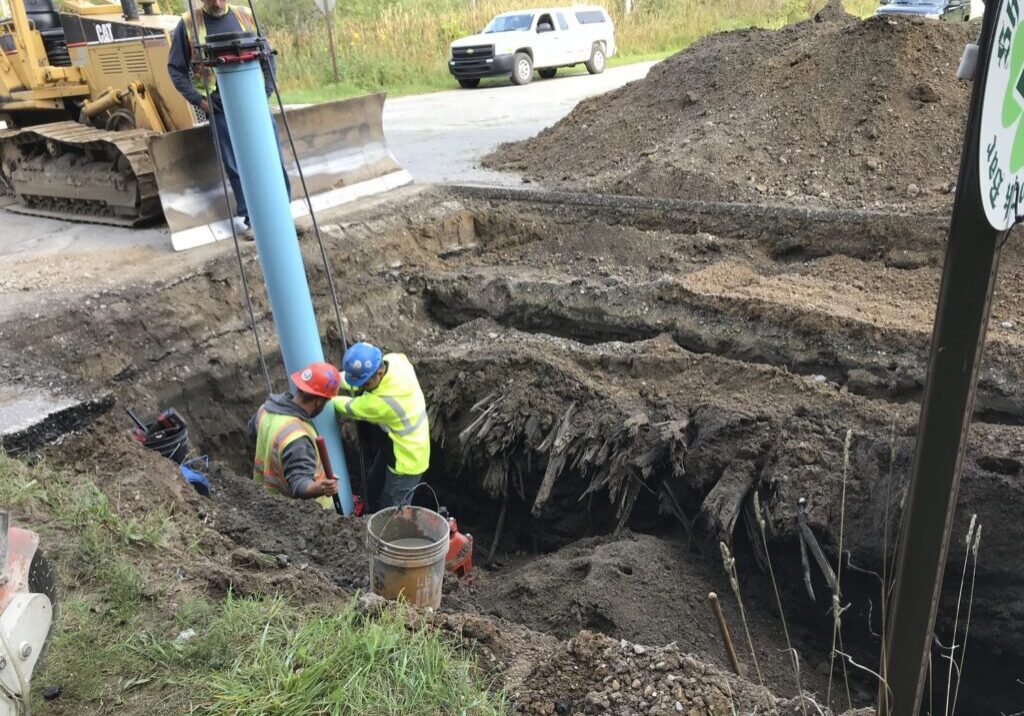
Stormwater at construction sites has its own challenges and requirements. Where construction sites have the potential for stormwater runoff, soil erosion can occur due to the open land and loose sediments. A Soil Erosion and Sedimentation permit is often required to manage stormwater and soil erosion during construction.
- To manage construction stormwater risks, counties regulate the issuance of construction Soil Erosion and Sedimentation permits for projects within their counties. Each county chooses which of its departments will regulate and issue these permits.
- Typically, Soil Erosion and Sedimentation stormwater permits require regular stormwater and sediment control inspections and installation of erosion control devices at construction sites throughout the life of the project to prevent soil erosion.
- Once construction is complete, site monitoring doesn’t stop. It will be necessary for the project Soil Erosion and Sedimentation permit holder to assess how long it takes for vegetation to become established to prevent erosion, and to verify that the site is graded correctly to maintain stormwater conveyance without pooling or ponding.
How Fleis & VandenBrink Supports Stormwater Management
- Permit assistance
- F&V can assist clients in preparing NPDES discharge permit applications, preparing SWPPPs, conducting stormwater inspections, and reporting.
- F&V can collect discharge samples as part of NPDES monitoring.
- SWPPP preparation and updates
- F&V will work with communities or businesses to prepare or maintain their SWPPPs and can help make any updates to their existing plans.
- F&V can train municipalities to complete stormwater inspections and visual assessments and to maintain good documentation.
- Construction site inspection services
- F&V can assist with construction stormwater management
If your community or business needs help creating or updating a Stormwater Pollution Prevention Plan, or if you’re looking for construction stormwater assistance, please reach out to one of F&V’s experienced staff. Talk to our team today.
You can reach us today at any one of our 11 locations.
Related Posts