Pickleball Court Construction: How to Plan, Budget & Build
Bottom line: Pickleball courts should be planned as civic infrastructure, with attention to location, clearances, surface, drainage, ADA access, lighting, fencing, and park circulation.
- For parks and public works teams: Converting tennis courts, building new courts, or adding indoor play all call for different site analysis and construction decisions.
- For city leaders: Courts can give parks a visible, high-use amenity that supports recreation, neighborhood activity, and community gathering.
- What to watch: Court layout, safety zones, stormwater, surfacing, and access routes need to be set before construction begins.
- F&V perspective: Fleis & VandenBrink helps communities from site analysis and survey through design, permitting, construction management, and post-construction GIS updates.
Pickleball is one of the fastest-growing sports in the United States. Parks, schools, and community centers are adding courts to meet demand, often by converting unused spaces. A well-designed court is more than a play surface. It’s a community anchor.
Why Pickleball Courts Matter
A new pickleball court can transform your local park or recreation center. It becomes a gathering place that encourages residents to stay active, socialize, and enjoy time outdoors.
The benefits extend beyond the park itself. Players and spectators often spend money at nearby businesses. Larger facilities can attract leagues and tournaments, which bring even more visitors. Parks with updated recreational amenities also help raise property values and make your town more attractive to developers looking for strong, vibrant neighborhoods.
In short, recreational spaces spark activity that feeds the local economy.
Court Placement and Design Decisions
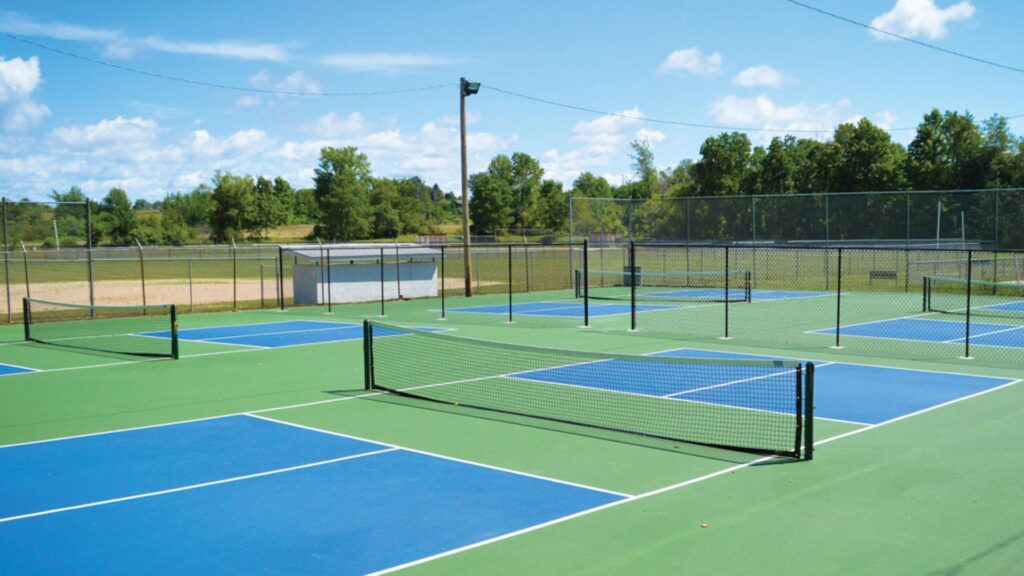
The first step is choosing a location. Many communities give old tennis courts a second life by converting them into pickleball courts. Others invest in new outdoor courts to highlight summer play. Indoor courts can keep the sport alive during Michigan’s winters, though they require more upfront investment.
Court size matters. The official play space is 20’x44’, but communities often plan for 30’x60’ or larger for player safety.
Surface choice matters too. Asphalt, clay, and concrete are durable and widely used, while polyurethane or rubber adds extra cushioning for comfort.
How Much Does It Cost to Build a Pickleball Court?
Budgets vary by project scope, location, and features. Here’s a quick guide:
| Court Type | Typical Cost Range | Notes |
|---|---|---|
| Outdoor courts | $20,000 – $50,000 | Most cost-effective; depends on prep and materials |
| Indoor conversions | $30,000 – $60,000 | Extends season; higher upfront investment |
| Multi-court projects | Higher overall | Cost savings by building at once |
Additional features such as lighting, fencing, bleachers, restrooms, and ADA-accessible paths can add to the budget, but they also make the facility more attractive for events and broader community use.
How Fleis & VandenBrink Can Help
At Fleis & VandenBrink, we manage the entire pickleball court construction process. Our services include:
- Site analysis and topographic surveys
- Design and permitting
- Construction management
- Post-construction GIS updates
We also help communities pursue grants or low-interest loans to give projects a financial path forward.
Case Study: Big Rapids
F&V partnered with the City of Big Rapids to design and oversee pickleball courts as part of a larger park renovation. The project included refurbished tennis courts, a barrier-free kayak launch, a splash pad, and basketball courts. The improvements brought new energy to the neighborhood, especially for students at a nearby elementary school, while giving local businesses more foot traffic from visitors just a block away.
Ready to Start Planning?
Pickleball’s popularity isn’t slowing down. If your community is exploring new courts, Fleis & VandenBrink can provide the technical expertise and project management to make it happen.
Tell us about your project, and we’ll join you on the court!
You can reach us today at any one of our 11 locations.
Related Posts