Lowest Bid, Highest Cost: Why Communities Should Look at Qualifications-Based Selection

When a city council reviews engineering proposals for a watermain replacement, a road reconstruction, or a wastewater plant upgrade, the temptation to take the lowest bid is hard to argue against. It looks like the fiscally responsible choice, it is easy to defend to taxpayers, and in most public procurement frameworks, it is the default.
Sometimes the lowest bid does turn out to be the right call. More often, it doesn’t. When an engineering bid comes in well below the rest, the underlying scope is usually thinner, the staffing is usually lighter, and the gaps left in the proposal often surface later as change orders, rework, schedule delays, or regulatory problems. The community ends up paying more in the end, and the engineer’s office fields calls from a frustrated council asking how this happened.
This post explains how that pattern plays out, where the hidden costs hide, and why a procurement approach called Qualifications-Based Selection (QBS) has become the standard for federally funded engineering work across the country.
Table of Contents
Why “Lowest Bid” Feels Like the Safe Choice
The low-bid procurement model did not start as a way to control project costs; it was an anti-corruption measure. In the late 1800s and early 1900s, many government officials treated public works projects as personal revenue streams. The shift toward awarding contracts to the lowest bidder was meant to remove favoritism, kickbacks, and side deals from the process.
The intent was sound. Open the bidding to anyone able and willing to perform, take the cheapest qualified offer, and trust competition to keep prices down.
What the model assumes, and what often turns out not to be true, is that every bidder is proposing the same work. That assumption works reasonably well for commodity purchases: salt for the roads, pickup trucks, copier paper. It works much less well for engineering services, where the value of what is being delivered depends heavily on the experience and judgment of the people doing the work.
How Low Engineering Bids Break
Engineering firms that come in well under the others on a public project tend to use the same handful of mechanisms to get there. None of them is obvious from the outside, which is why councils get surprised when the trouble starts.
Underscoped Hours
The fastest way to lower a bid is to scope fewer hours into the work. A firm that estimates 200 hours of design time for a watermain extension where the project demands 350 hours will look cheaper on paper. It will also run over budget once construction begins, and the overage will hit the community as change orders.
Junior-Heavy Staffing
Billing rates vary widely between a senior engineer with 25 years in water systems and a junior engineer two years out of school. A firm can lower its bid by loading more hours onto the junior staff. When the junior work needs review and revision, which it almost always does, the senior engineer’s hours come in on top of the budget that has already been spent. The community ends up paying for the same task twice.
Missing Scope Items
EGLE permits, EPA submittals, road agency approvals, drain commission coordination, and other regulatory work add hours to a project. A bid that omits some of this work looks cheaper. When the permit comes due, it gets added as a change order.
Capacity Problems
A firm that wins more work than it can staff will move slowly. Drawings sit on desks; field visits get delayed. The construction schedule slips, which costs the contractor money, which the contractor passes back to the owner. None of this shows up in the original bid.
A council member reviewing proposals cannot always tell which firm has done any of this. The cover sheets look similar, the fees are itemized in similar categories, and the difference shows up months later.
What It Costs When a Project Goes Sideways
When a public-sector engineering project starts running into the problems above, communities have two bad options. They can stay with the original firm and pay through the change orders, or they can switch firms and start over.
Switching is expensive in ways that do not appear on any invoice. A new request for proposals (RFP) cycle takes about one to two months from advertisement through firm selection and contract negotiation. During that period, the project sits idle. Once the new firm is engaged, it has to spend its own hours reviewing everything the previous firm produced before it can move forward, and that review time is paid for by the community. Decisions get re-litigated, field conditions may need to be re-verified, and regulatory relationships have to be rebuilt.
If the project is on a funding deadline, those lost months can put the funding itself at risk. Grants and State Revolving Fund loans frequently come with expiration dates.
There is also the political cost. Constituents notice when projects stall and costs rise. The council member who recommended the low bid ends up explaining a decision that was supposed to be the responsible one.
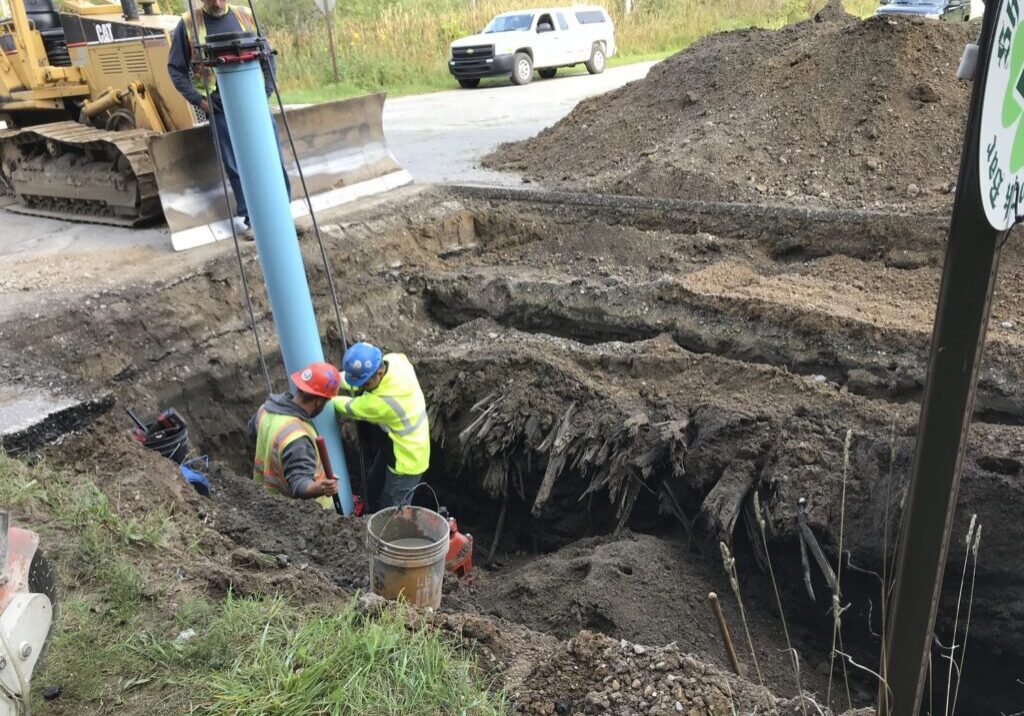
This is the case for having an experienced engineering firm in place before trouble starts. When a watermain in Northville broke during a February 2021 snowstorm and kept failing as repair clamps were added, the City’s Department of Public Works called Fleis & VandenBrink (F&V), the firm already serving as their engineers. F&V worked with the City Council on emergency funding approval, contacted EGLE that same afternoon about an emergency permit, and had a permit in hand by the end of the week. The project replaced 200 feet of failing cast-iron watermain with HDPE pipe by directional drilling, avoiding open-cut excavation under a nearby stream. No businesses on the affected block were shut down.
The emergency permit timing did not happen because someone quickly read the rulebook. It happened because the relationships, the institutional knowledge, and the engineering judgment were already in place. A firm chosen on price alone, brought in for the first time during a crisis, would not have moved that fast.
Where Quality Design Earns Its Cost
A higher engineering bid almost always reflects more hours, more senior staff, and a more thorough scope. It also reflects design judgment that prevents costs further down the project lifecycle.
Treatment Plant Layout
The arrangement of equipment, piping, electrical systems, and access paths inside a water or wastewater treatment plant determines how that facility will operate for the next 30 to 50 years. Operators have to be able to reach valves, maintain pumps, and respond to equipment failures without taking the plant offline. A site layout designed quickly looks fine on paper. The cost of fixing a poorly laid-out plant after construction is enormous, sometimes large enough to force rebuilding parts of the facility.
Material Specifications
Pipe material, valve types, joint connections, and bedding details each present trade-offs between upfront cost and service life. Cast-iron watermains installed in the 1950s are still failing in cities across Michigan and Indiana today. A material specification that saves money at construction may obligate the community to a replacement project decades earlier than necessary.
Bigger-Picture Project Scoping
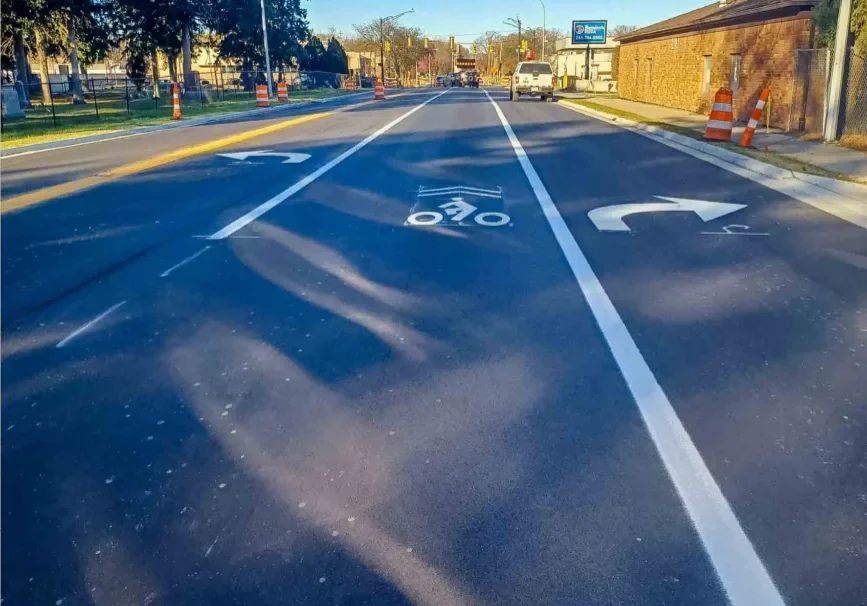
A road reconstruction project that addresses only the pavement surface, even though the underlying drainage, curb conditions, and traffic patterns also need work, leaves the community with a fresh-looking road that will get torn up again in five years to fix what was missed the first time. An experienced engineer looks at the full system before recommending a scope.
These are not glamorous parts of an engineering bid. They are also where the difference between a competent project and a problematic one is made.
A Better Approach: Qualifications-Based Selection
The federal government recognized the limits of low-bid procurement for engineering work in 1972. The Brooks Act (Public Law 92-582) directs federal agencies to select architects and engineers based on qualifications first. The price for the work is negotiated after the most qualified firm has been chosen.
That process has a name: Qualifications-Based Selection, or QBS. Forty-six states have adopted some version of it for their own procurement, modeled on the Brooks Act. Michigan mandates QBS for state agency procurement under MCL 18.1237b, and the state is currently updating that law to apply more broadly across state contracts. Federally funded local projects already use QBS by federal mandate. EGLE’s State Revolving Fund program, which finances many municipal water and wastewater projects in Michigan, applies the same QBS standard to the engineering work it funds.
Michigan does not, however, mandate QBS for local government engineering procurement. Communities can choose to use it. Many do not, and end up working through the problems described above.
Here is how QBS works in practice.
- The community first issues a Request for Qualifications (RFQ), which asks interested firms to describe their experience, their team, their past projects, and their approach to the project. No price is included.
- The community evaluates the responses and ranks the firms based on qualifications alone.
- The top-ranked firm is then invited to negotiate scope and fees.
- If that negotiation fails, the community moves to the second-ranked firm.
What QBS prevents is the race to the lowest credible scope. Firms cannot win the work by cutting hours, loading the project with junior staff, or omitting permit work. The selection is based on which firm is best suited to do the project well, and the scope is then defined in a collaborative conversation between the community and that firm.
Research from the American Council of Engineering Companies (ACEC) Research Institute found that QBS projects average 3 percent cost growth versus 6 percent for the national average, and 7 percent schedule growth versus 10 percent nationally. About half of QBS projects (48 percent) meet all construction milestones without schedule adjustments, compared with 32 percent of non-QBS projects. Construction documents produced under QBS tend to be more complete, which reduces the change orders and rework that drive cost overruns in low-bid projects.
There is a fiscal argument as well. Engineering services typically account for less than half of one percent of total project costs over the life of a project. The hours and design judgment that go into that small fraction of the budget heavily shape the remaining 99.5 percent. Trying to save money on the half-percent line, at the cost of mistakes that affect the other 99.5 percent, is a poor trade.
What QBS Looks Like in Practice
Be Clear About the Budget Up Front
Communities sometimes try to keep their budget number to themselves, on the theory that firms will quote higher if they know the ceiling. The opposite is more often true. A firm that knows the budget can design the project to fit it. Without that number, the firm is guessing.
Write a Fresh RFQ for Each Project
Recycling old RFQs from previous projects produces vague, generic proposals. The scope and schedule details that matter for this project should be written into the document.
Meet With Firms Before They Submit
A short conversation with qualified firms before proposals are due lets the firm understand the goals of the project, the constraints, and the politics. The proposals that come back are sharper, and the community gets a better sense of which firm understands the work.
Clearly Define Scope and Schedule
When the scope and schedule are clearly described, the proposals submitted by different firms can be evaluated on the same basis. Vague RFQs produce proposals that are difficult to compare.
Ask About Funding Experience
Federal and state funding programs (USDA Rural Development, EGLE State Revolving Fund, Community Development Block Grants, MDOT funding programs) all have their own rules and timelines. A firm that has navigated these programs before can sometimes find money the community did not know it was eligible for. A firm without that experience misses opportunities and may stumble through compliance.
A Final Note for Councils Reviewing Proposals
When a council asks why one engineering bid is much higher than another, the most useful question to ask is which firm is most likely to deliver this project on schedule, within budget, and with the design judgment that prevents future problems. That question is hard to answer from a stack of proposals alone, which is why qualifications-based selection has become the federal and state-level standard for engineering procurement.
A community evaluating an engineering bid that comes in higher than the others is usually looking at the cost of someone showing up to the project with the experience to do it right the first time.
F&V is glad to help communities think through their procurement process before a project gets to bid. Whether the project is a watermain replacement, a wastewater plant upgrade, a road reconstruction, a brownfield redevelopment, or anything else, we have helped municipalities across Michigan and Indiana write RFQs, evaluate proposals, and structure projects for funding. If your community is preparing to start a project, contact our team to start the conversation.
You can reach us today at any one of our 11 locations.
Related Posts